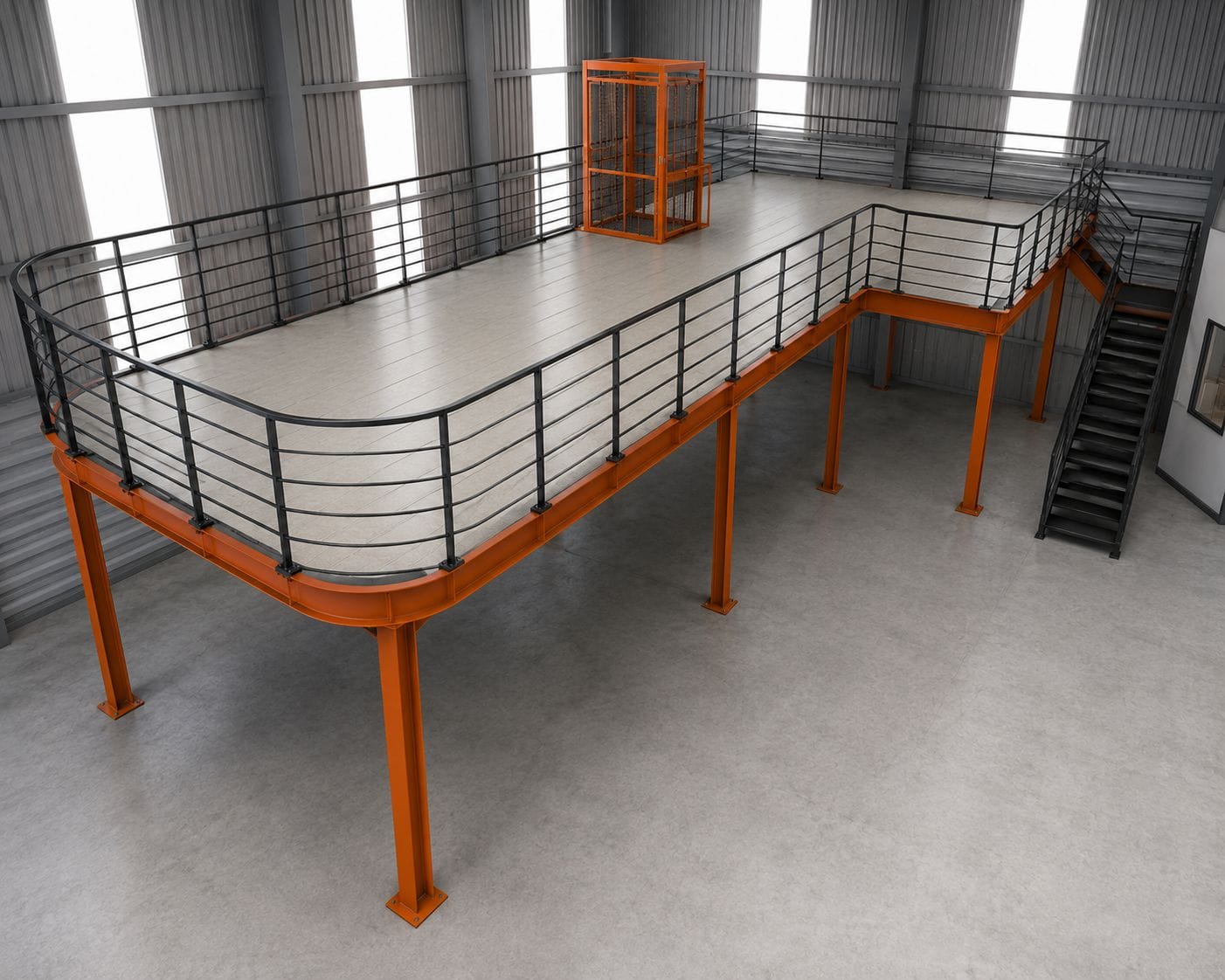
A mezzanine floor is more than just an additional level inside a warehouse. For businesses with unused vertical space, a professionally designed mezzanine can create valuable additional areas for storage, offices, manufacturing, packing and many other business activities. As businesses grow, finding additional floor space can become a challenge. Moving to a larger premises is one option, but it is not always necessary. If your existing building has sufficient height and suitable structural conditions, a mezzanine floor could help you make better use of the space you already have. Here are seven practical ways businesses can use a mezzanine floor.
1. Create Additional Warehouse Storage
One of the most common uses for a mezzanine floor is creating additional storage space. Warehouses often have substantial unused vertical space above the existing storage and operational areas. Instead of expanding the building, a mezzanine can create another usable level within the existing footprint. A warehouse mezzanine can be used for: Stock storageInventory, Spare parts, Packaging materials, Seasonal stock, Picking areas, General warehouse storage.
The structure can be designed according to the required loading and intended use, making it possible to create a storage solution around the specific requirements of the business.
2. Add Office Space Inside a Warehouse or Factory
Many growing businesses need additional office space but do not want to sacrifice valuable ground-floor warehouse or production space. A mezzanine can provide an elevated area for offices, administration or meeting rooms while keeping the ground floor available for the main operation. This can be particularly useful for businesses that need to expand their office team but have limited space within their existing premises. A well-planned office mezzanine can include areas such as: Private offices, Open-plan workspaces, Meeting rooms, Administration areas, Staff spaces, Storage areas. This allows businesses to separate administrative activities from warehouse or manufacturing operations while remaining within the same building.
3. Create a Dedicated Picking and Packing Area
For e-commerce, distribution and logistics businesses, picking and packing can require a considerable amount of space. As order volumes increase, businesses may find that packing stations and stock preparation are taking over valuable warehouse floor space. A mezzanine can provide a dedicated level for picking, packing or order preparation. The layout can be planned around the movement of stock and employees, helping create a more organised working environment. For businesses experiencing continued growth in online orders or distribution activity, creating dedicated operational areas can be an important part of making better use of available warehouse space.
4. Expand Manufacturing or Production Space
Mezzanine floors can also be used in manufacturing and industrial environments. Additional floor space can potentially be created for production-related activities, workstations, equipment or supporting operations. The design needs to take the specific requirements of the manufacturing environment into consideration. This can include: Equipment, Machinery, Material handling, Required floor loading, Employee movement, Production work flow, Access requirements. A professionally engineered industrial mezzanine can therefore be designed around the way the business actually operates.
5. Create a Workshop or Work Area
Businesses that require dedicated work areas can use mezzanine flooring to create additional workshops or operational spaces. For example, an industrial business may need an area for repairs, assembly, maintenance or other specialised activities. Rather than using valuable ground-floor space that could be required for storage or production, a mezzanine can provide another level for these activities where the building is suitable. The important factor is to design the structure around the intended use and loading requirements.
6. Expand Retail or Showroom Space
Mezzanine floors are not limited to warehouses and factories. Retailers and commercial businesses can also use mezzanine flooring to create additional display, showroom, stock or customer areas. A mezzanine can allow a business to increase its usable floor area without necessarily increasing the building's footprint. Depending on the layout, the additional level could be used for: Product displays, Stock storage, Showrooms, Customer areas, Offices, Back-of-house operations. This can be particularly useful where the available building footprint is limited but there is unused vertical space.
7. Create Space for Future Business Growth
One of the biggest benefits of a mezzanine floor is the ability to create additional capacity before a business completely outgrows its premises. As a company grows, its space requirements can change. It may need: More stock storage, Additional employees, Larger packing areas, More office space, Additional production capacity, More equipment. A mezzanine can provide an opportunity to use the existing building more efficiently and create additional capacity for future growth.
Why Choose The Mezzanine Factory?
At The Mezzanine Factory, the focus is on creating practical space solutions around the individual requirements of each business. The process can include: Site assessment, Concept design, Structural engineering, Manufacturing, Installation, Certification. This approach allows the mezzanine to be designed around the building, intended use and required loading rather than relying on a one-size-fits-all solution. Whether you need additional warehouse storage, office space, manufacturing capacity or a flexible rental solution, the first step is understanding what your existing building can accommodate.
Frequently Asked Questions
What are the most common uses for a mezzanine floor?
Common uses include warehouse storage, offices, picking and packing, manufacturing, workshops, retail space, showrooms and additional operational areas.
Can a mezzanine floor be used for storage?
Yes. Mezzanine floors can be designed for different storage applications, provided the structure is engineered for the required loads.
Can I use a mezzanine floor for offices?
Yes. A mezzanine can create additional office, administration or meeting space inside a warehouse, factory or commercial building.
Can a mezzanine be used for manufacturing?
Yes. Industrial mezzanines can be designed around manufacturing requirements, including equipment, workflow and required loading.